 Breed
Breed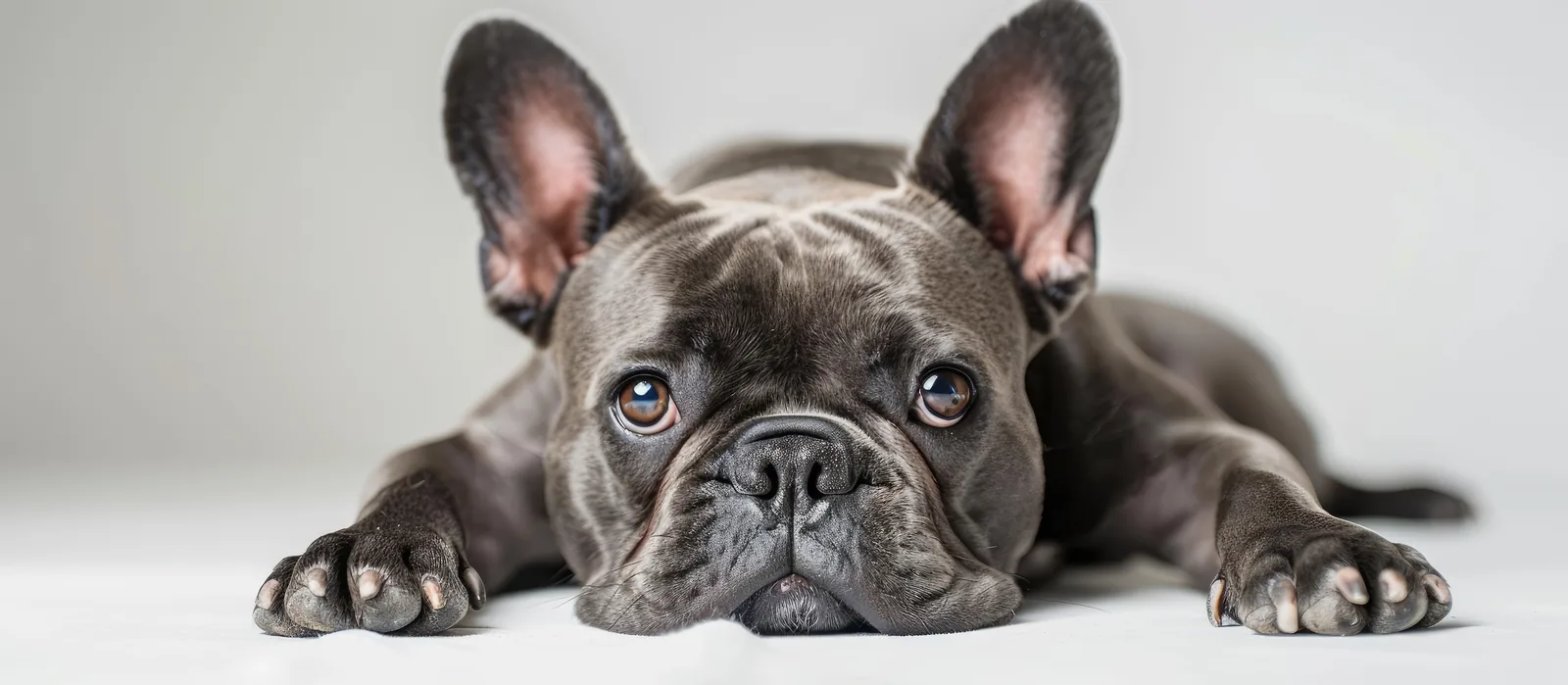
Sources checked September 1, 2026
Non-Sporting Group · AKC's #1 most popular breed, 2025
French Bulldog
Playful, adaptable, and famously bad at two things: barking and swimming. Here is what the AKC's own breed page and the actual veterinary literature say about the French Bulldog, read directly from those sources, not reworded from a listicle.
Temperament
In the AKC's own words: "The one-of-a-kind French Bulldog, with his large bat ears and even disposition, is one of the world's most popular small-dog breeds, especially among city dwellers. The Frenchie is playful, alert, adaptable, and completely irresistible." The AKC also notes they are "dogs of few words" who don't bark much, but their alertness makes them good watchdogs, and that they happily adapt to life with singles, couples or families, without needing much outdoor exercise. Source: AKC, French Bulldog breed page.
Health and care: what actually matters with this breed
The French Bulldog's flat face is its defining trait and its biggest health liability. This is not a minor cosmetic note; it shapes almost everything about caring for one.
Breathing. The widely quoted figure is that roughly 70% of French Bulldogs show some degree of Brachycephalic Obstructive Airway Syndrome (BOAS). It comes from a 2015 peer-reviewed study of flat-faced breeds that classed 13 French Bulldogs as affected, so it rests on a small number of dogs. BOAS is caused by a combination of narrowed nostrils, an elongated soft palate, and a narrowed airway. In practice this means increased sensitivity to heat, exercise intolerance, and labored breathing, and in severe cases it can progress over the dog's life. Source: Packer et al., "Impact of Facial Conformation on Canine Health: Brachycephalic Obstructive Airway Syndrome," PLOS ONE, 2015.
Heat. The AKC's own care guidance states plainly: "Like all flat-faced breeds, Frenchies are prone to breathing problems and do poorly in hot or humid weather." This lines up with the AVMA's general exercise guidance, which singles out brachycephalic breeds as needing shorter walks, more rest, and careful timing around the hottest part of the day, regardless of the dog's size. Sources: AKC, French Bulldog breed page (above); AVMA, "Walking or running with your dog".
Water. The AKC is direct about this one too: "Because of their front-heavy structure, Frenchies cannot swim and should never be left unattended near a tub, pool, or body of water." This is anatomical, not a training gap: their body shape and short legs make swimming physically difficult, and their flat face sits close enough to the water's surface that even a small splash can be inhaled. Source: AKC, French Bulldog breed page (above).
Other known issues. Per the AKC, French Bulldogs are also more sensitive to anesthesia than most breeds (relevant for spay, neuter or any surgical procedure), and occasionally develop eye conditions (cherry eye, juvenile cataracts, entropion) and skin allergies or autoimmune skin disorders. None of these are guaranteed to affect a given dog; they are documented, breed-associated risks to ask a vet about, not certainties.
Feeding
There is no French Bulldog-specific feeding chart worth trusting from a general source like this one; portion needs depend on the individual dog's weight, age, and activity level, and a vet is better positioned to set that than a breed page. One thing is worth flagging specifically for this breed. Weight also matters for a narrow airway: a veterinary overview of BOAS says obesity worsens respiratory function. Ask your vet what a healthy weight is for your dog. Source: Today's Veterinary Practice, "An Overview of Brachycephalic Obstructive Airway Syndrome".
Questions people actually search
Why does my French Bulldog snore so loudly?
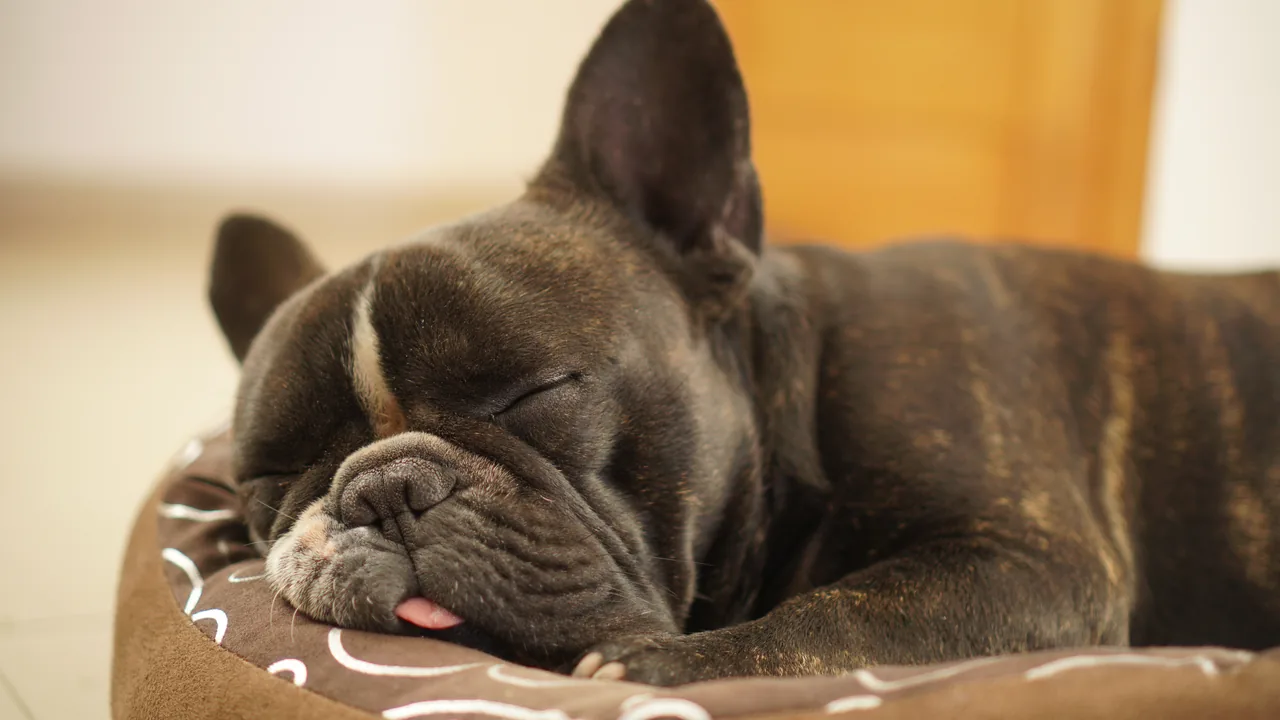
The same narrowed airway that causes BOAS is behind it. The soft palate, nostrils and throat are proportioned for a dog with a normal-length muzzle, compressed into a much shorter face. Snoring is common in the breed and often treated as "normal for a Frenchie," but loud, labored breathing while awake, not just asleep, or snoring paired with fainting, blue-tinged gums, or collapse after exercise, is not normal and needs a vet visit.
Can French Bulldogs go in a pool or the ocean?
Not unsupervised, and not without a well-fitted flotation device. Their body structure (heavy front end, short legs) means they cannot keep themselves afloat the way most dog breeds can, and their flat face sits low enough to the water's surface that even mild splashing can send water into their airway. This is a real drowning risk documented by the AKC itself, not internet caution culture.
Is a French Bulldog a good fit for a hot climate?
Not without real adjustments. This breed does poorly in heat and humidity by the AKC's own description, and general veterinary exercise guidance specifically calls out brachycephalic breeds as needing shorter activity windows timed around cooler parts of the day. A French Bulldog can live in a hot climate, but "just like any other dog, just walk it in the morning" understates the risk for this specific breed.
Is it riskier to put a French Bulldog under anesthesia?
Per the AKC, yes, more so than for most breeds, because the same narrowed airway behind BOAS makes airway management during and after anesthesia more delicate. This matters for any surgical procedure, spay or neuter included, and is a genuine reason to use a vet who has real experience with brachycephalic breeds specifically, not a reason to avoid necessary surgery altogether.