 Breed
Breed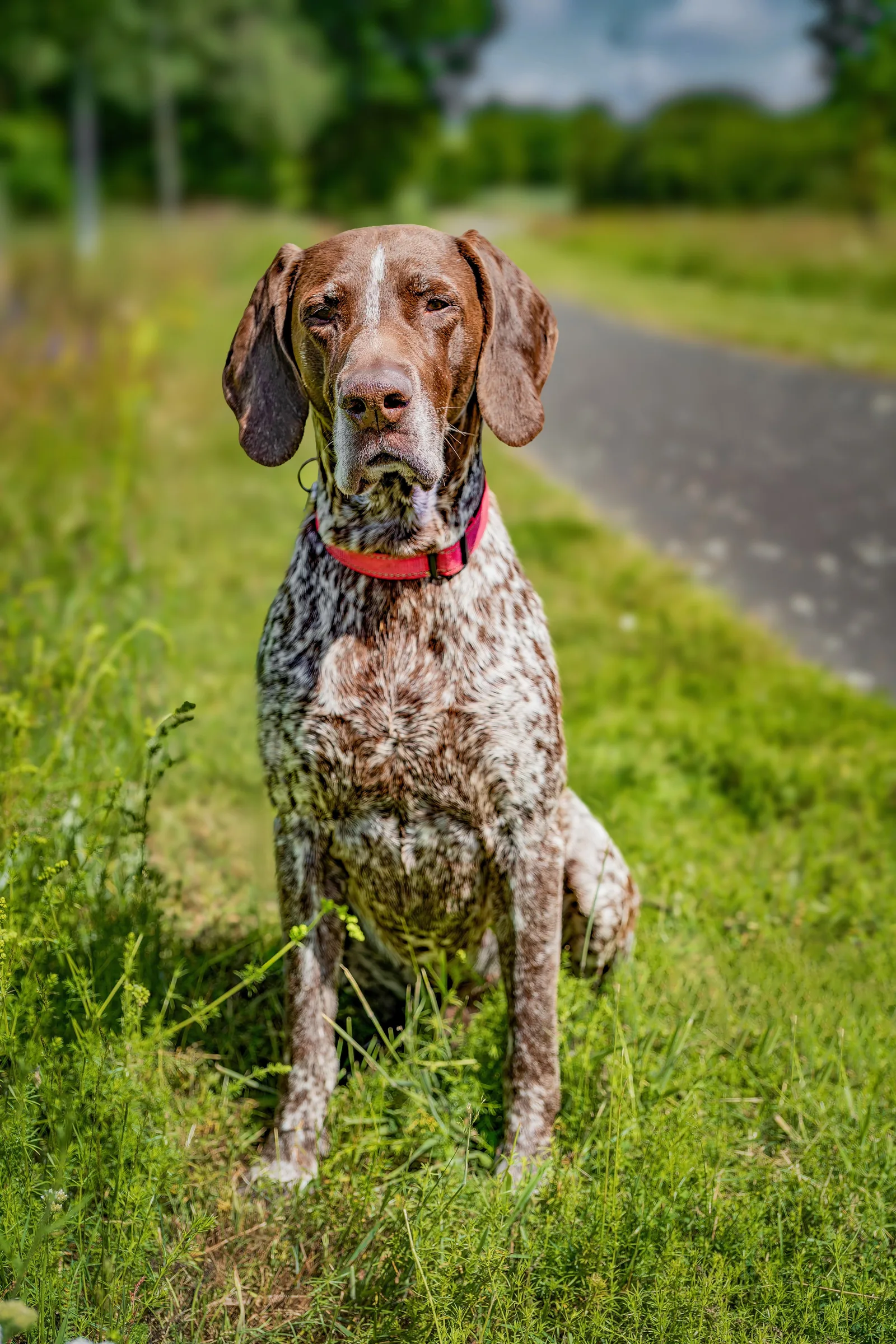
Sources checked September 3, 2026
Sporting Group · AKC's #9 most popular breed, 2025
German Shorthaired Pointer
Built as an all-purpose gundog and still wired like one: the AKC's own care guidance calls for real exercise twice a day, every day, not just as a puppy phase to outgrow. Here is what the AKC's own breed page, a national health registry, and real genetic research say about the German Shorthaired Pointer, read directly from those sources, not reworded from a listicle.
Temperament
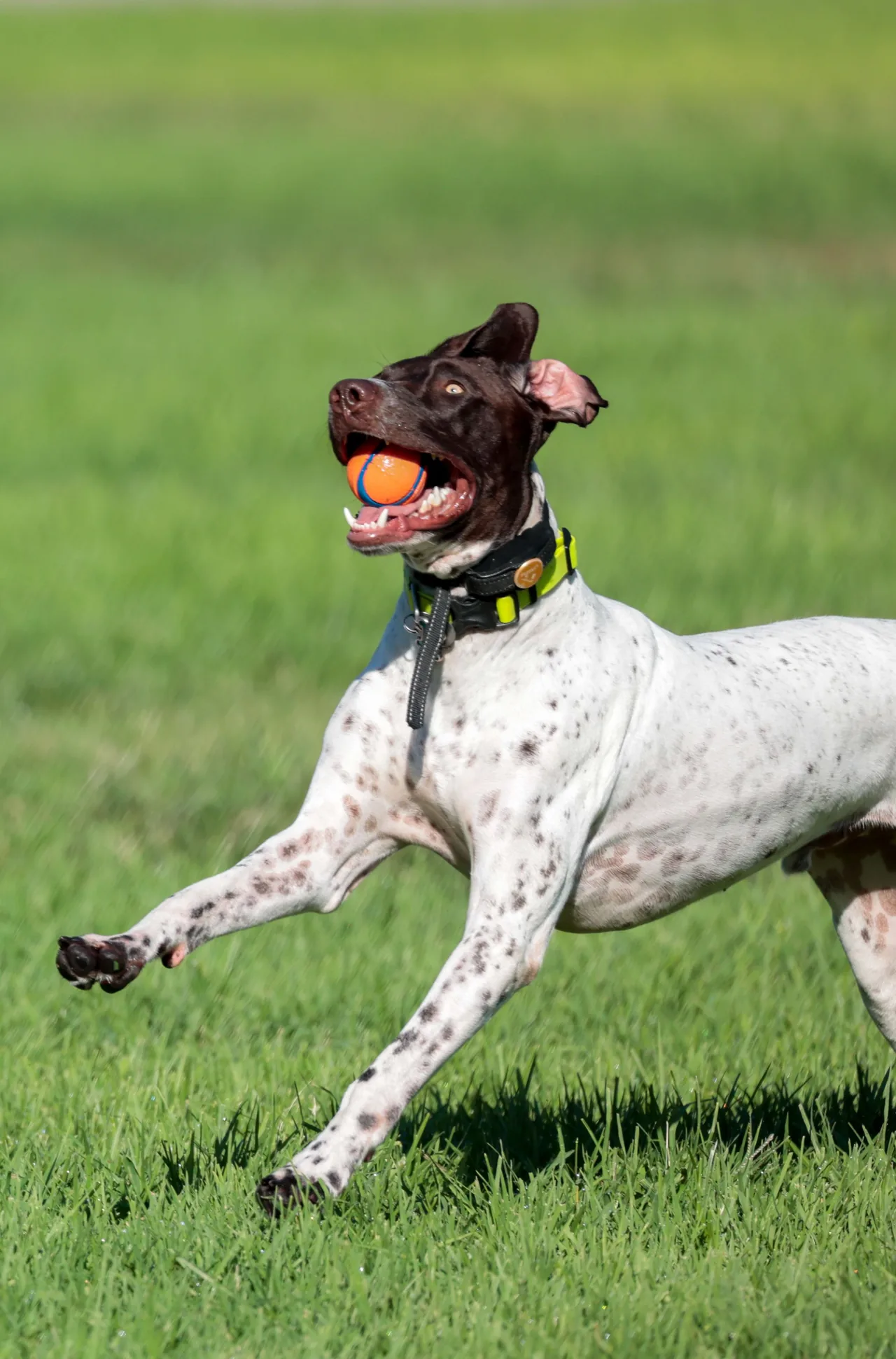
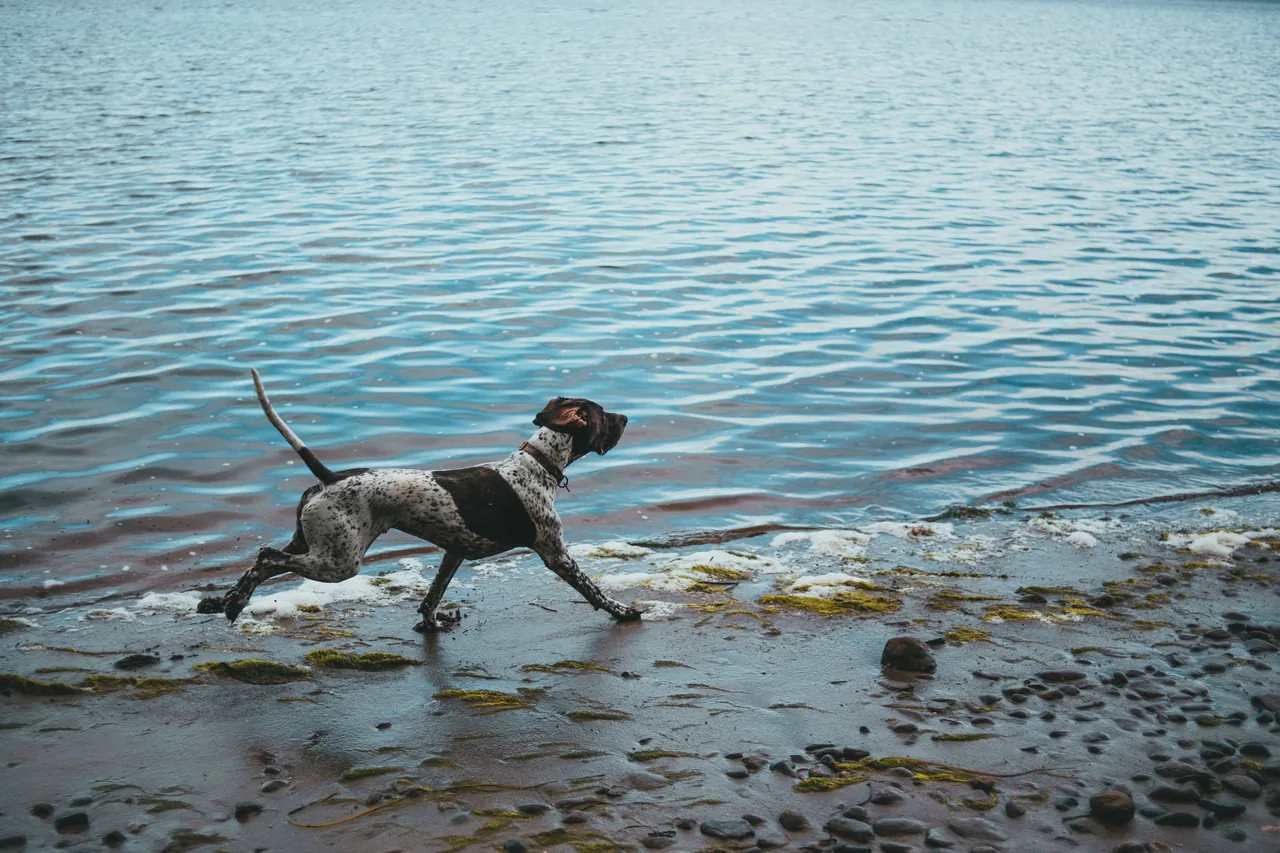
The AKC's own three-word summary is "friendly," "smart," "willing to please." Its longer description calls the GSP "an enthusiastic gundog of all trades who thrives on vigorous exercise, positive training, and a lot of love." That enthusiasm is not a mild personality note. The AKC's own exercise guidance says the breed "does best with plenty of exercise and things to do, such as running, swimming, and dog sports," and that its routine "should ideally include ample physical activity twice a day," for example brisk half-hour walks morning and evening or supervised running in a securely fenced area. Separately, in its training guidance, the AKC states plainly that GSPs "have a very high energy level and a strong prey drive" and need "an owner with an active lifestyle," warning that the breed "can be extremely challenging from 6 months to 3 years old" without one. Source: AKC, German Shorthaired Pointer breed page.
Health and care: what actually matters with this breed
The AKC's own breed page lists hip dysplasia, eye conditions such as progressive retinal atrophy, and certain heart diseases as conditions responsible breeders screen for, and separately warns that GSPs "can also be affected by bloat, a life-threatening condition where the stomach suddenly distends and often twists as well," telling owners to learn the symptoms and emergency response in advance. Its recommended health-test list for the breed's national club includes hip and elbow evaluation, a cardiac exam, an ophthalmologist evaluation, and a DNA test specifically named "Cone Degeneration (German Shorthaired Pointer)." Source: AKC, German Shorthaired Pointer breed page.
Cone degeneration (day blindness). That AKC test name is not generic; this condition was first genetically characterized in this breed. Per the UC Davis Veterinary Genetics Laboratory (VGL), canine cone degeneration is an autosomal recessive disease that causes day blindness and photophobia starting between 8 and 12 weeks of age, while vision in low light stays normal, so a standard ophthalmic exam can look normal; it is confirmed by electroretinography or by a DNA test for the mutation. VGL identifies the specific mutation found in German Shorthaired Pointers as a distinct missense change in the CNGB3 gene. A peer-reviewed paper in BMC Genetics confirms the same point: "in the German shorthaired pointer it results from a missense mutation in exon 6" of CNGB3, a different mutation from the one found in Alaskan Malamutes, though both cause the same day-blind phenotype. Sources: UC Davis Veterinary Genetics Laboratory, Cone Degeneration; Yeh et al., "Genomic deletion of CNGB3 is identical by descent in multiple canine breeds and causes achromatopsia," BMC Genetics, 2013.
Hip dysplasia, in context. Hip evaluation is on the AKC's recommended test list for this breed, but the Orthopedic Foundation for Animals' own database does not show the GSP as a high-risk breed for it: as of September 20, 2026, of 23,643 German Shorthaired Pointers evaluated, OFA reports 3.7% scored dysplastic, ranking the breed 196th out of 220 breeds listed, meaning most breeds on OFA's list score worse, not better (OFA updates its database continuously). The screening is still worth doing on breeding stock; it just is not the breed's biggest documented risk. Source: Orthopedic Foundation for Animals (OFA), Hip Dysplasia Statistics by Breed.
Bloat. The AKC's warning above is not boilerplate. GSPs are a large, deep-chested breed, the body type most consistently linked to gastric dilatation-volvulus (GDV) risk in veterinary literature, which is why the AKC calls out symptom recognition and emergency response specifically for this breed rather than leaving it as a generic footnote.
Feeding
There is no GSP-specific feeding chart worth publishing here; portion needs depend on the individual dog's age, weight and activity level, best set with a vet. Given the breed's bloat risk noted above, the AKC's guidance is specific rather than generic: GSPs "should not be fed immediately after running or other vigorous exercise," should not be allowed to run or exercise for at least an hour after eating and drinking, and the AKC recommends the dog's evening meal come after the day's physical activity is finished, not before it. Source: AKC, German Shorthaired Pointer breed page.
Questions people actually search
How much exercise does a German Shorthaired Pointer actually need?
More than most breeds, per the AKC's own guidance, and not just while young. The AKC recommends "ample physical activity twice a day," for example brisk half-hour walks morning and evening or supervised running in a securely fenced area, and separately describes the breed as having "a very high energy level and a strong prey drive" that requires an owner with an active lifestyle. The AKC also warns the breed "can be extremely challenging from 6 months to 3 years old" without enough outlet for that energy, so this is not a need that fades once puppyhood ends.
What is cone degeneration, and is it common in German Shorthaired Pointers?
It is a genetic eye condition, not folklore. A specific mutation in the CNGB3 gene, first characterized in this breed and confirmed in peer-reviewed research, causes day blindness that typically appears between 8 and 12 weeks of age, while low-light vision stays normal. It is inherited as an autosomal recessive trait, meaning a dog needs the mutation from both parents to be affected, which is exactly why the AKC's recommended health panel for this breed includes a specific DNA test for it rather than relying on a standard eye exam, which cannot detect it.
Why shouldn't I feed my German Shorthaired Pointer right before or after exercise?
GSPs are large and deep-chested, the body type most associated with gastric dilatation-volvulus, a sudden and life-threatening twisting of the stomach, which is why the AKC's own nutrition guidance for this breed is specific rather than generic. The AKC's advice is concrete: do not feed immediately after vigorous exercise, do not let the dog run for at least an hour after eating or drinking, and schedule the evening meal after the day's activity is done.