 Breed
Breed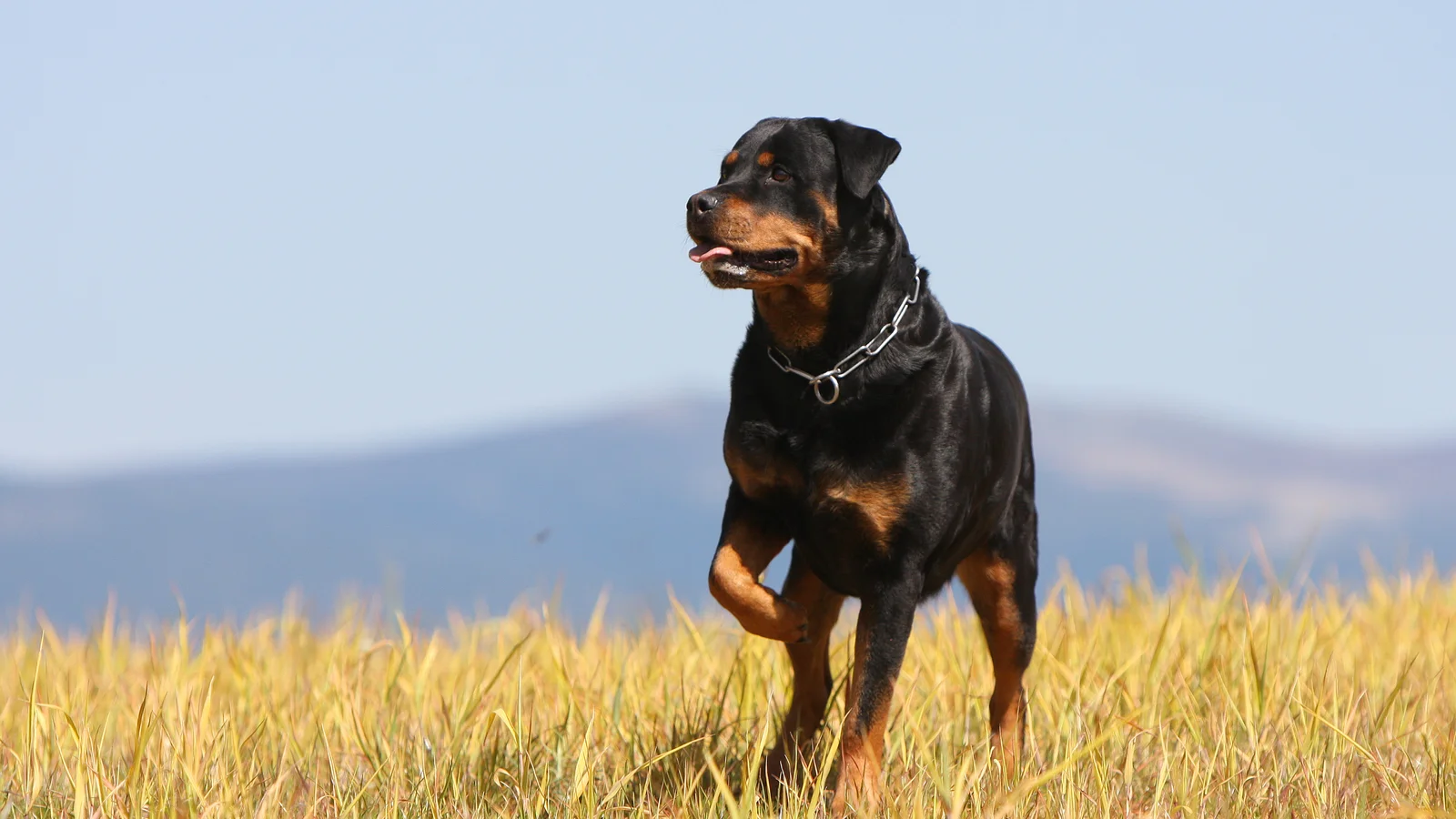
Sources checked September 3, 2026
Working Group · AKC's #8 most popular breed, 2025
Rottweiler
Confident, loyal, and often stereotyped as aggressive, with a bone cancer risk that is unusually well studied and tied to one specific, controllable decision: when the dog is spayed or neutered. Here is what the AKC's own breed page and real peer-reviewed research say about the Rottweiler, read directly from those sources, not reworded from a listicle.
Temperament
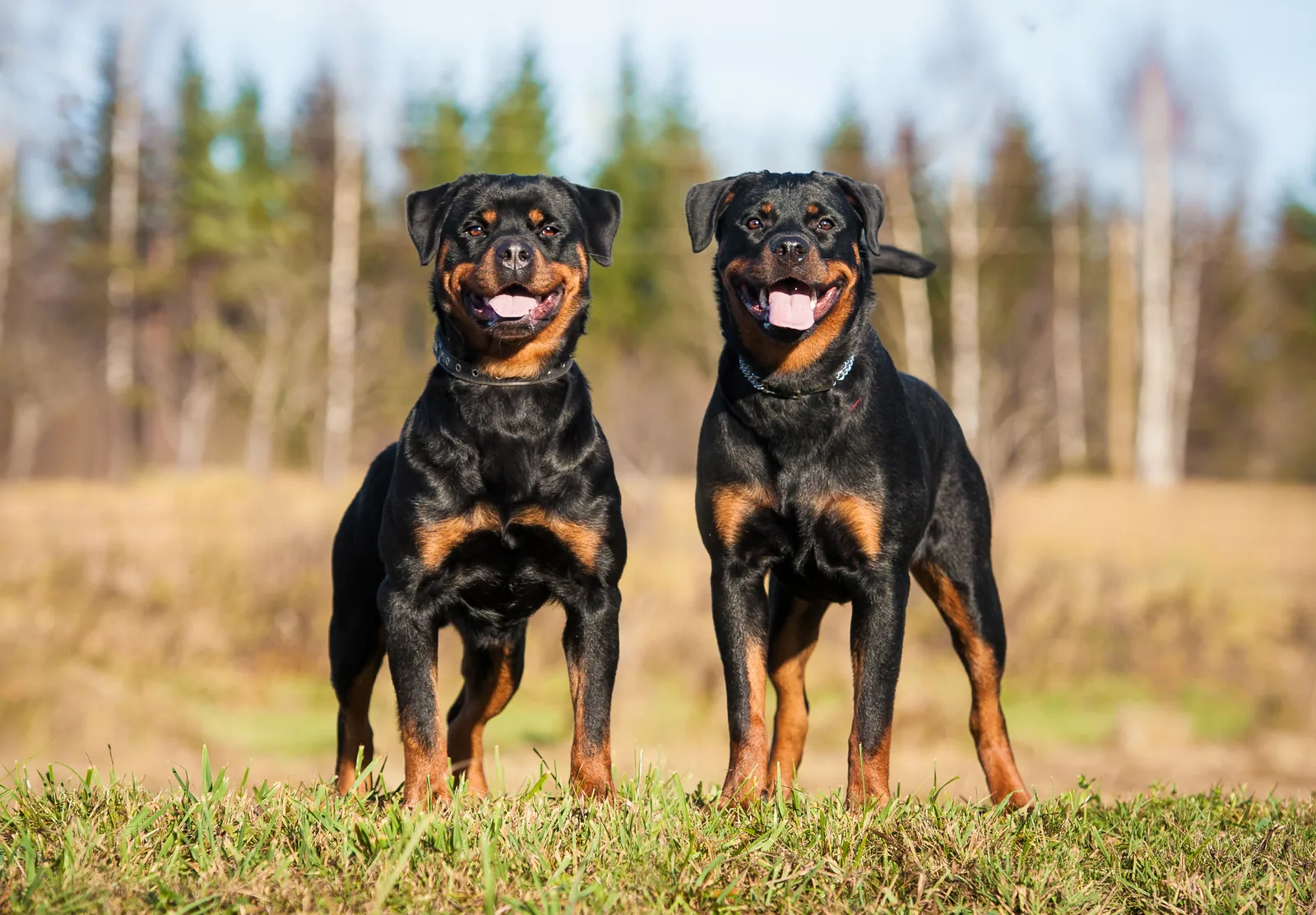
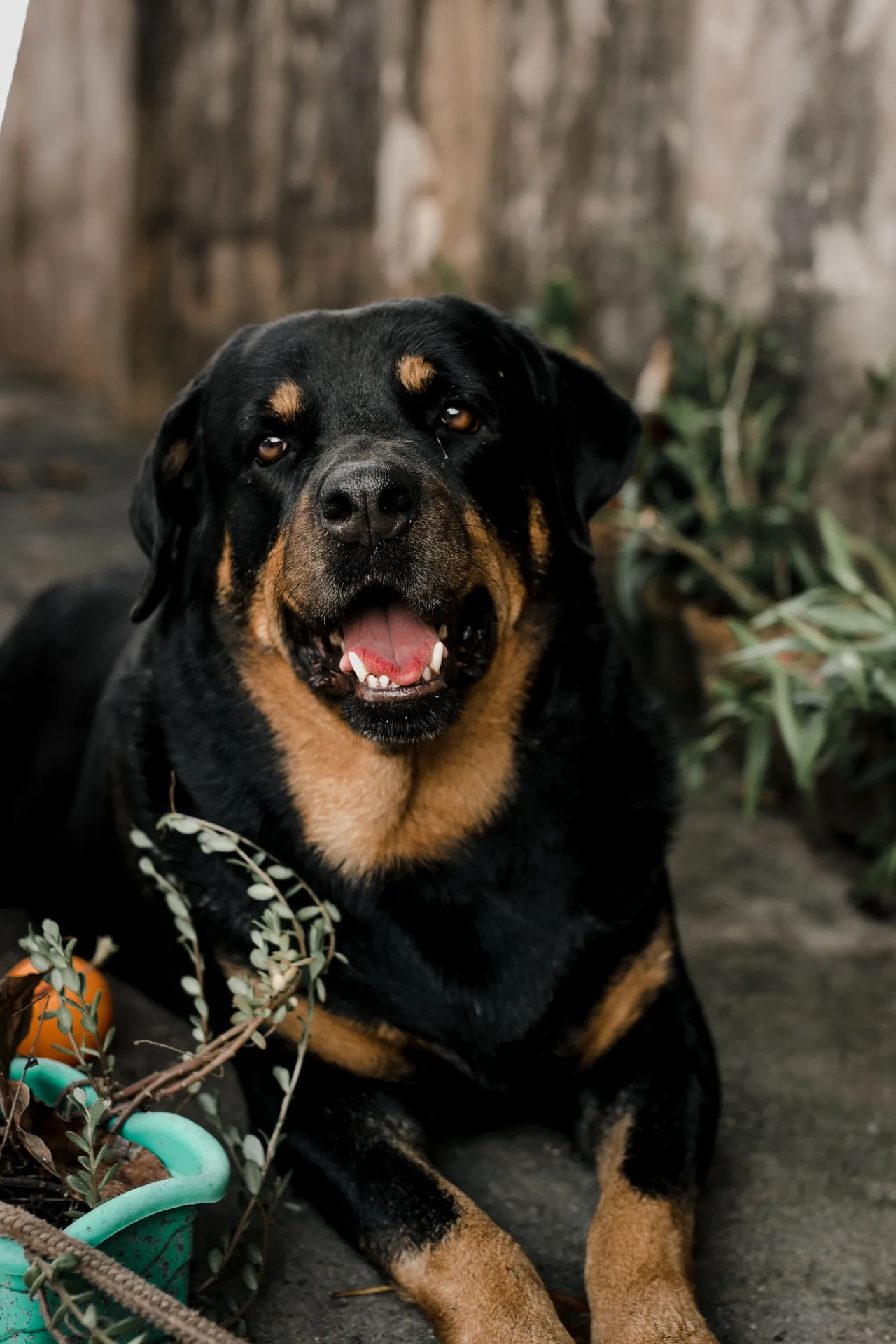
In the AKC's own words, the Rottweiler is "a robust working breed of great strength descended from the mastiffs of the Roman legions," and within the family circle "a gentle playmate and protector" who "observes the outside world with a self-assured aloofness." The AKC is direct that this reserve is not the same thing as aggression: "a well-bred and properly raised Rottie will be calm and confident, courageous but not unduly aggressive," and that same aloof exterior "belies the playfulness, and downright silliness, that endear Rotties to their loved ones." The AKC also notes that early training and socialization are what channel the breed's territorial instincts in a positive direction, not something that happens automatically. Source: AKC, Rottweiler breed page.
Health and care: what actually matters with this breed
Rottweilers carry the standard list of large-breed joint and eye conditions, and one cancer risk that is unusually well documented and unusually tied to a single, controllable decision: when the dog is spayed or neutered.
Screening basics. Per the AKC, responsible Rottweiler breeders test breeding stock for hip dysplasia, eye diseases and heart conditions before breeding. The national breed club's recommended health tests are a hip evaluation, an elbow evaluation, a cardiac exam, an ophthalmologist evaluation, and a DNA test for Juvenile Laryngeal Paralysis and Polyneuropathy (JLPP), a condition specific enough to the breed that a dedicated genetic test exists for it. Source: AKC, Rottweiler breed page.
Bone cancer and neuter timing. The AKC's own breed page notes that David Waters, Ph.D., DVM, of the Gerald P. Murphy Cancer Foundation, has researched cancer and longevity in Rottweilers with funding from the Rottweiler Health Foundation. The underlying peer-reviewed study backs that up with real numbers: Waters and coauthors followed 683 Rottweilers in North America and found bone sarcoma (osteosarcoma) diagnosed in 12.6% of the group over the study period. Dogs of either sex spayed or neutered before one year of age had roughly a one-in-four lifetime risk of bone sarcoma, significantly higher than intact dogs (3.8 times the risk for males, 3.1 times for females), and the relationship held independent of the dog's adult height or weight. Sources: AKC, Rottweiler breed page (above); Cooley et al., "Endogenous Gonadal Hormone Exposure and Bone Sarcoma Risk," Cancer Epidemiology, Biomarkers and Prevention, 2002.
Feeding
There is no Rottweiler-specific feeding chart worth publishing here; portion needs depend on the individual dog's weight, age, and activity level, best set with a vet. One consideration is genuinely documented for a breed this size: per AAHA's own nutrition and weight management guidelines, large and giant breed puppies may not reach skeletal maturity until 15 to 16 months of age, later than the roughly 1 year typical of small and medium breeds, and AAHA specifically recommends maintaining a lean body condition and avoiding excessive calcium intake during that stretch to support proper joint growth. Source: AAHA, 2021 Nutrition and Weight Management Guidelines for Dogs and Cats, "Age-specific and Breed-specific Diets".
Questions people actually search
Is it true that neutering a Rottweiler too early raises cancer risk?
For this specific breed, yes, and it is backed by real numbers, not a rumor. A peer-reviewed study that followed 683 Rottweilers found bone sarcoma in 12.6% of the group, and dogs spayed or neutered before one year of age had roughly a one-in-four lifetime risk of developing it, several times higher than dogs left intact. That does not mean neutering is wrong for every dog; it means the timing is worth a real conversation with a vet rather than defaulting to the earliest possible age.
How much exercise does a Rottweiler actually need?
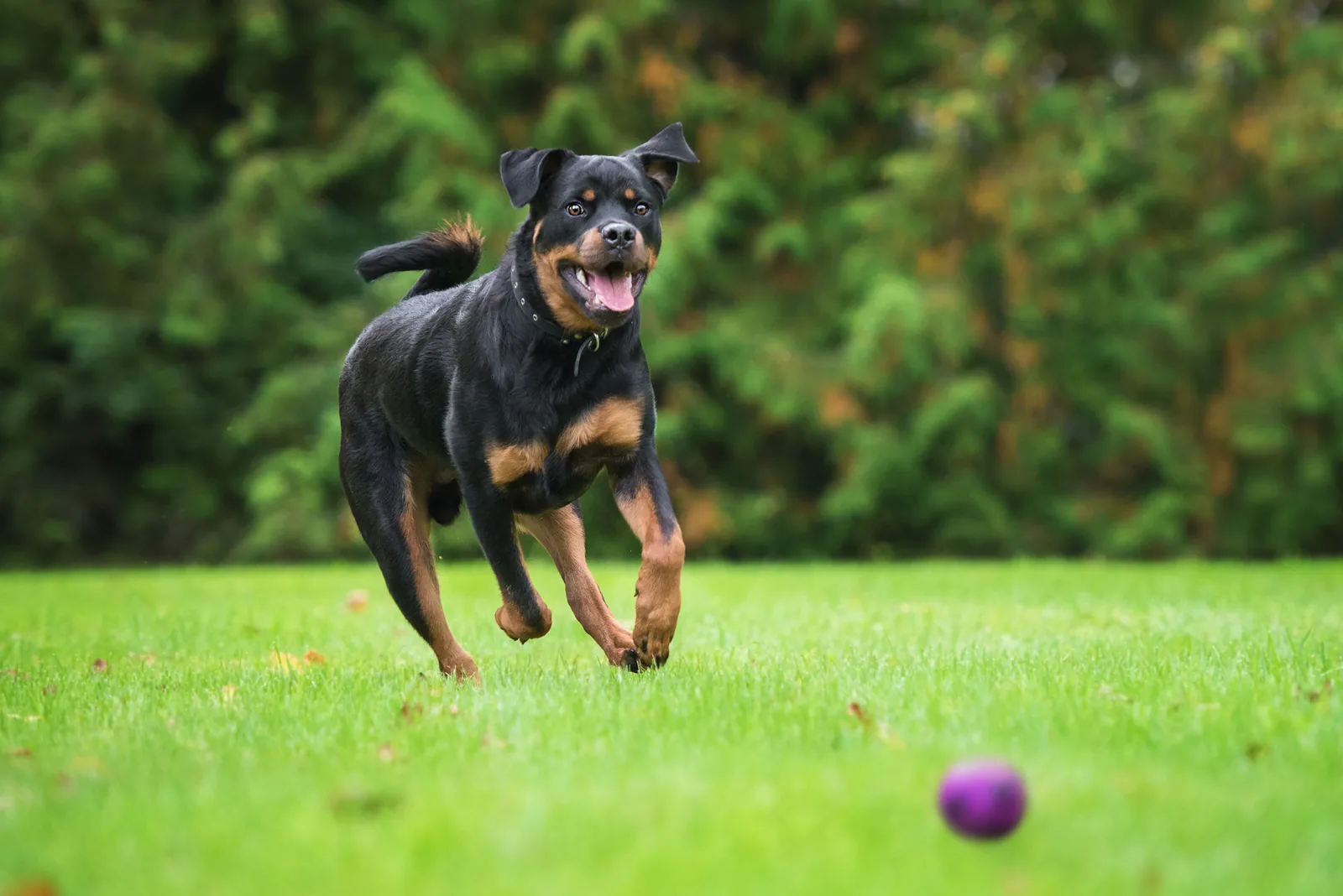
More than the breed's calm household reputation might suggest. The AKC describes Rottweilers as loving swimming, walking and trotting, especially with their people, and notes the breed is muscular and athletic and should get daily exercise. Excess weight is not good for any dog, and exercise helps keep a Rottweiler fit, which matters given how large and heavy-boned the breed is at full size.
Are Rottweilers naturally aggressive dogs?
Per the AKC's own description, no: a well-bred, properly raised Rottweiler is "calm and confident, courageous but not unduly aggressive," and the breed's reserved, watchful manner around strangers is a self-assured aloofness, not hostility. The AKC is clear that this has to be shaped through early training and socialization to channel the breed's territorial instincts in a positive way, and specifically warns that roughhousing with a Rottweiler can encourage aggression, a training and handling factor, not evidence the breed is inherently dangerous.