 Breed
Breed

Sources checked September 2, 2026
Sporting Group · AKC's #2 most popular breed, 2025
Labrador Retriever
Friendly, easygoing, and one of the most misleadingly low-maintenance-looking breeds on this list. Here is what the AKC's own breed page and real veterinary and genetics research say about the Labrador Retriever, read directly from those sources, not reworded from a listicle.
Temperament
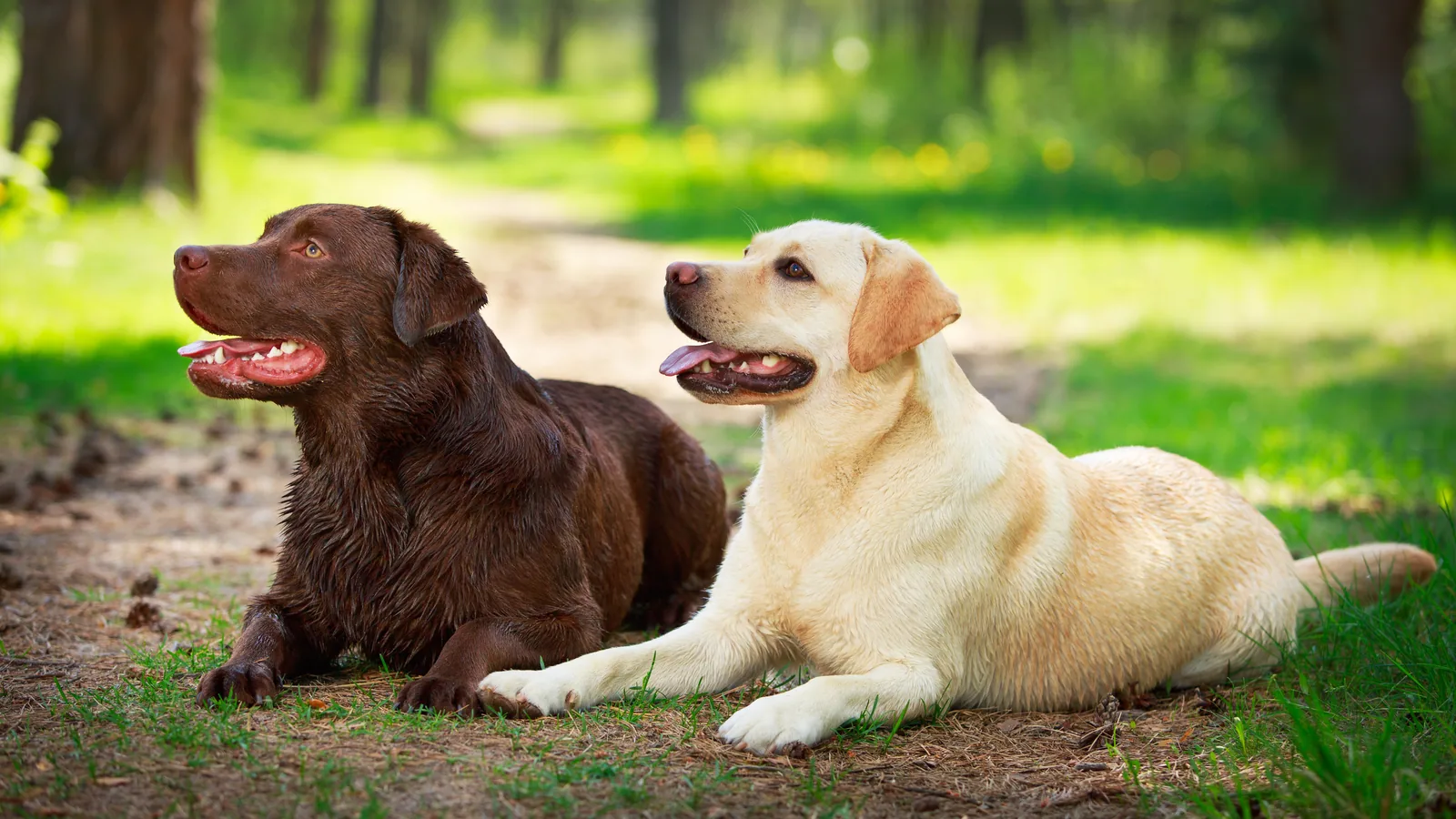
In the AKC's own words: Labs are "friendly, outgoing, and high-spirited companions who have more than enough affection to go around for a family looking for a medium-to-large dog." The AKC is explicit about a common misreading of the breed: "don't mistake his easygoing personality for low energy: the Lab is an enthusiastic athlete that requires lots of exercise, like swimming and marathon games of fetch, to keep physically and mentally fit." Source: AKC, Labrador Retriever breed page.
Health and care: what actually matters with this breed
Labs are generally healthy, but two things surprise new owners more than any breed-specific disease: how much this breed actually eats, and how quickly a stomach problem can turn into an emergency.
Appetite. A peer-reviewed study out of Cambridge, published in Cell Metabolism, found a deletion in the canine POMC gene strongly associated with weight, obesity and appetite in Labradors: about 22% of Labs carry at least one copy of the variant (20% one copy, 2% two copies, in a sample of 383 UK Labradors), and each copy is associated with the dog being an average of about 4.2 pounds heavier (1.9kg, as reported in the study). Dogs with the mutation also showed greater food motivation than dogs without it, which means the breed's famous food obsession has a real, documented genetic basis in a large share of the population, not just enthusiastic training. Source: Raffan et al., "A Deletion in the Canine POMC Gene Is Associated with Weight and Appetite in Obesity-Prone Labrador Retriever Dogs," Cell Metabolism, 2016.
Joints and eyes. Per the AKC, responsible breeders screen breeding stock for elbow and hip dysplasia, heart disorders, hereditary myopathy (muscle weakness), and progressive retinal atrophy. A DNA test exists for exercise induced collapse (EIC), a condition that can affect young adult Labs, letting breeders identify carriers and plan breedings to avoid producing it.
Bloat. The AKC notes that, "like other large, deep-chested dogs," Labs can develop gastric dilatation-volvulus (bloat), a sudden, life-threatening swelling and twisting of the stomach. Early signs include restlessness, drooling and unproductive attempts to vomit; a visibly swollen abdomen, weakness or collapse are late signs that need emergency care immediately, not a wait-and-see approach. Sources: AKC, Labrador Retriever breed page (above); AAHA, "Understanding Canine Bloat (GDV)".
Feeding
Given the POMC finding above, portion control matters more for this breed than most, and a Lab that always acts hungry five minutes after a full meal is not necessarily under-fed. Measuring food rather than free-feeding, and asking a vet to confirm an appropriate calorie target for the individual dog's weight and activity level, does more for a Labrador's long-term health than any specific brand or formula choice.
Questions people actually search
Why is my Labrador always hungry, even right after eating?
For roughly one in five Labs, it is at least partly genetic. The POMC gene variant described above is associated with greater food motivation, so the same amount of food that satisfies another dog can leave a carrier wanting more. It is real appetite, not just begging behavior, which is exactly why portion control has to be deliberate rather than led by how insistent the dog seems.
How much exercise does a Labrador actually need?
More than the breed's calm, friendly reputation suggests. The AKC describes the Lab as "an enthusiastic athlete that requires lots of exercise, like swimming and marathon games of fetch," specifically warning owners not to mistake the easygoing temperament for low energy. A bored, under-exercised Lab is a common source of destructive chewing and weight gain, not a coincidence.
What are the actual warning signs of bloat in a Labrador?
Restlessness, drooling, and trying to vomit without bringing anything up are the early signs. A visibly swollen or hard abdomen, weakness, collapse, or obvious distress are late signs, and by that point it is a true emergency: get to a vet immediately rather than waiting to see if it passes. Large, deep-chested dogs like Labs are specifically named by the AKC as at higher risk for this condition.